Why Choose a DTF Printer? A Practical Buyer’s Guide for Fast, Flexible Apparel Decoration

The world of textile decoration and garment printing has evolved rapidly over the last decade. From traditional screen printing to heat transfer vinyl (HTV) and sublimation, each method has had its advantages and limitations. But now, a new technology is transforming the apparel printing industry : the DTF (Direct-to-Film) printer .
If you’re asking yourself: “Why choose a DTF printer over other printing methods?” , the answer lies in its versatility, cost-effectiveness, and superior print quality . In this guide, we’ll explore the reasons why DTF printers have become the go-to choice for print shops, clothing brands, and custom merchandise businesses worldwide.
A DTF printer is a specialized digital printing machine designed to print designs directly onto PET transfer film , which is then heat-pressed onto fabrics. Unlike sublimation (limited to polyester) or HTV (requires cutting and weeding), DTF printers allow you to print full-color, photo-quality images that bond permanently to a wide variety of fabrics.
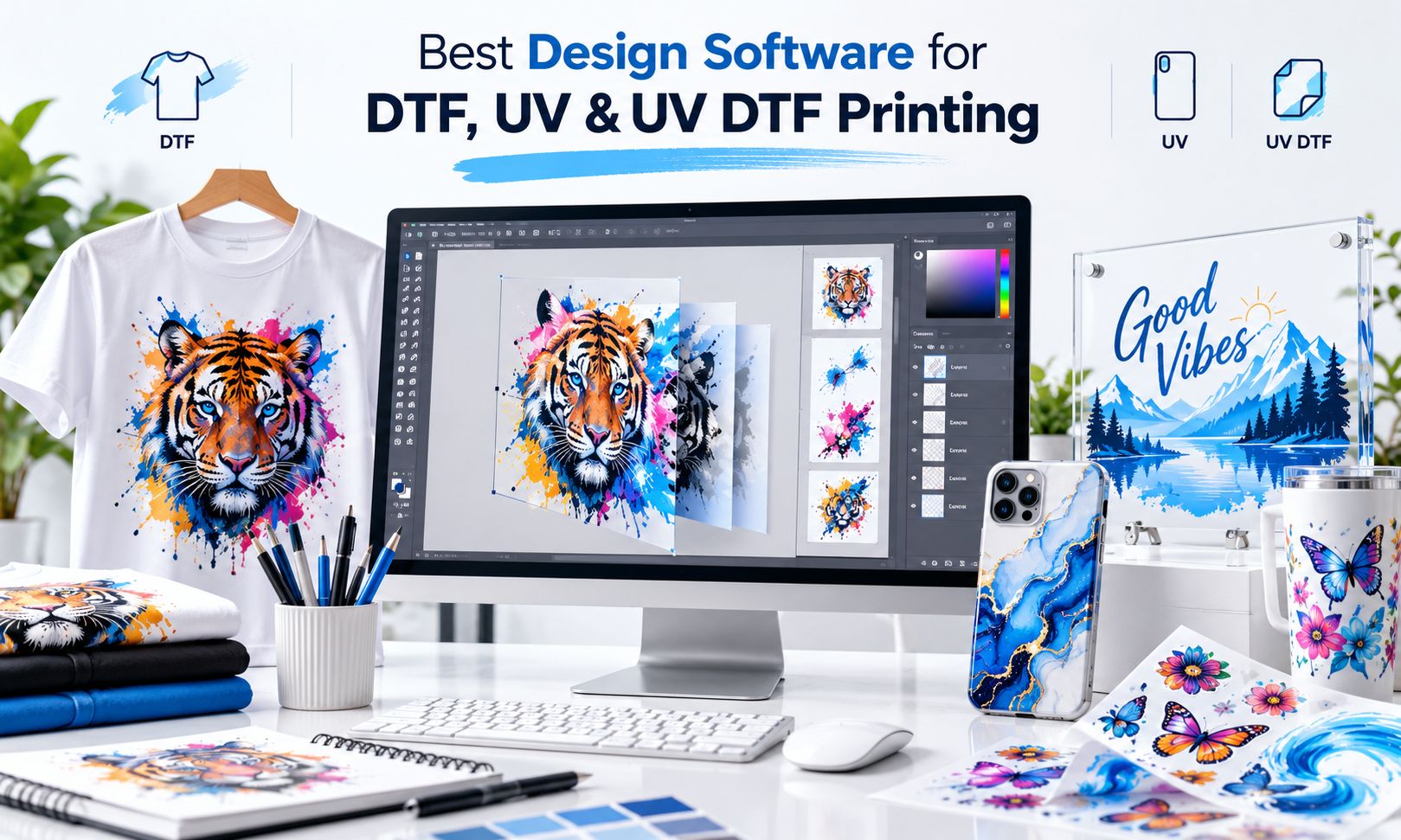
Design is created digitally (Photoshop, Illustrator, CorelDRAW, etc.). Printing : The DTF printer prints the design onto PET film using DTF inks (CMYK + White). Adhesive powder is applied to the wet ink. Curing : Powder is melted with heat to prepare for transfer. Heat Transfer : PET film is placed on the garment and pressed with heat. Peel & Finish : Film is peeled off, leaving a vibrant, durable print. Erasmart DTF Printer
Compact entry-level model perfect for startups and small batch production.
Enhanced A4 model with improved ink efficiency for daily small-scale production.
A3 format printer with reliable R1390 motherboard for medium production.
Standard A3 model with 250ml ink tanks for consistent daily operation.
L1800 print head model offering superior color reproduction for detailed designs.
A3 Max series with XP600 print head for increased speed and efficiency.
High-performance A3 model with DX7 print head for professional results.
High-performance A3 model with XP600 print head for professional results.
Professional dual print head A3 printer for high-volume production.
Industrial wide-format printer with dual XP600 heads (620mm width).
High-speed industrial model with dual I1600 heads (10㎡/h output).
Premium industrial printer with dual I3200 heads for maximum productivity.
One transfer works on cotton, poly, blends, nylon, and treated leather items. Great for mixed orders (team sets, corporate kits) without changing chemistry.
DTF eliminates pre-treat step common in DTG for dark garments, reducing labor, defects (staining, halos), and variability.
Print transfers in bulk, stock by size or design , and press during peak hours. Perfect for e-commerce, pop-ups, and event fulfillment.
With proper RIP and profiles, DTF holds fine lines, QR codes, and micro text better than most heat-transfer alternatives.
Correct cure and press yield excellent wash fastness with good stretch recovery. (Always validate to 10–20 home-launder cycles for your SKUs.)
Full-color with no screens, no color separations, and no minimums. Ideal for one-offs and short-to-mid runs.
Film + powder are predictable costs; ink efficiency is good for solid colors and gradients alike.
A printer, powder/curing unit (or oven), and a heat press fit into modest spaces. Add lanes as volume grows.
Names, numbers, localization, and micro-batches become profitable—print only what sells.
Fewer wet-processing variables make it easier to train staff and maintain repeatable output.
Method Best Use Strengths Limitations DTF All-fabric full color; on-demand No pre-treat; batchable; crisp detail; low setup Requires film & powder; press discipline matters DTG Cotton fashion tees, photoreal prints Very soft hand on cotton; direct print Pre-treat on darks; fabric limits; higher maintenance Screen Printing Large spot-color runs Lowest cost at high volume; ultra-durable High setup; not ideal for short runs or full color HTV (Vinyl) Names/numbers, simple designs Simple, low equipment cost Weeding labor; limited fine detail; multi-color stacks Sublimation 100% poly, white/light Vibrant, permanent dyes Polyester-only; no dark garments
Startups & Small Businesses : Low entry cost, easy to use, profitable on-demand printing. Custom Apparel Shops : Expand product offerings without fabric limitations. Screen Printers : Add digital printing capability without replacing existing methods. E-commerce Businesses : Fulfill small orders with personalized designs. Corporate Branding Companies : Produce durable uniforms, promotional products, and giveaways.
Print Size : A3 vs A2 vs wide-format. Ink System : Bulk ink tanks vs cartridges. Peel Type : Hot peel or cold peel film compatibility. After-Sales Support : Warranty, training, and spare parts availability. Production Speed : Matches your business demand.
A4 image area (~8.3×11.7 ) Film + powder: $0.35–$0.60 per A4 Ink: $0.20–$0.45 per A4 full-color graphic Press labor & overhead: $0.40–$0.70 per unit (operator time + utilities) Estimated per-shirt transfer cost: $0.95–$1.75 Typical selling price for full-color custom tee: $15–$30 (retail) / $8–$15 (wholesale). Gross margin remains healthy even at low quantities; personalization can command premiums.
Tip: track ink coverage by design in your RIP to quote with confidence. Quality & Durability: How to Get It Right
Ink & White Underbase: Calibrate white density for opacity without over-ink. Cure Window: Fully melt adhesive without over-baking (yellowing, brittle feel). Press Settings: Lock in temperature (verified at platen), even pressure , and dwell time. Wash Testing: Validate your recipe per fabric, detergent, and drying method. Film/Powder Grade: Premium films peel cleaner and feel softer; powders differ in melt point and elasticity. Where DTF Excels (Use Cases)
Merch & Streetwear: On-trend micro-drops, fast restocks without dead inventory. Teams & Workwear: Namesets, numbering, sponsor badges, hi-vis logos. Corporate & Schools: Mixed-fabric kits across departments and clubs. Events & Tours: Pre-print transfers, press live for custom moments. Fulfillment & POD: Centralize printing, ship transfers to satellite stores for local pressing. The DTF Workflow (Step-by-Step)
Design & RIP → ICC profiles, white underbase, choke/bleed as needed Print to Film → CMYK then white, or concurrent depending on head config Powder Application → Uniform coat; reclaim excess Cure → Oven/shaker unit to specified melt; avoid scorching Press → Time/Temp/Pressure per fabric and film spec; cold/warm peel Post-Press (optional) → Second press for improved hand and durability Safety & Environmental Notes
Water-based pigment inks with low odor Handle adhesive powder to minimize airborne dust ; use extraction where possible Maintain presses/ovens; confirm electrical loads and thermal safety Follow SDS for inks, powders, and cleaners Buying Checklist
Print Width & Speed: Match to daily order volume; consider overnight batch printing White Ink Circulation: Essential for uptime and nozzle health Shaker/Curer Control: Stable temps, even cure, powder reclaim Heat Press Quality: Accurate temperature, even pressure across platen RIP & Color Management: ICC profiles, queue management, ink tracking Consumables: Proven film & powder set; consistent supply Support & Training: Recipes, maintenance schedule, spare parts access
1. Are DTF printers better than DTG printers? Yes, in most cases. DTF works on more fabrics, requires no pre-treatment, and is more cost-effective. DTG, however, still offers unmatched softness on 100% cotton.
2. How long do DTF prints last? With proper heat pressing, DTF prints last 50–100+ washes without cracking or fading.
3. Can DTF printers print on polyester and nylon? Yes. This is a huge advantage over sublimation and DTG.
4. What is the difference between hot peel and cold peel PET film?
Hot peel : Faster production, matte finish. Cold peel : Glossy finish, better for small details. 5. How much does it cost to run a DTF printer? The cost per print depends on ink, powder, and film usage, but generally lower than DTG and HTV .
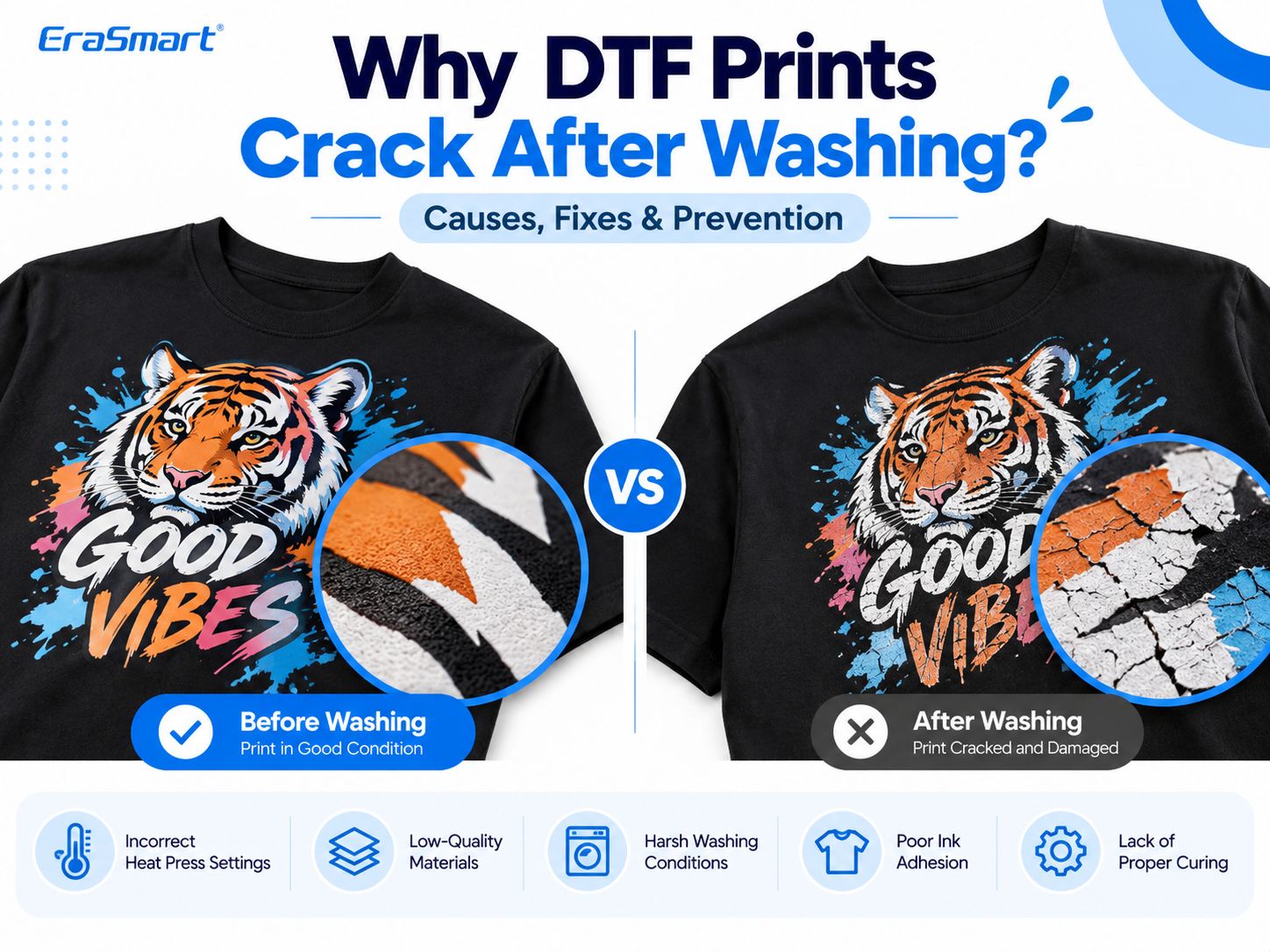
6. Will transfers crack after washing? When fully cured and pressed correctly , DTF holds up well to repeated washing. Poor cure or low pressure causes failures—validate your recipe.
7. Can I press onto nylon or stretchy athleisure? Yes—test first. Often slightly lower temps and careful peel are helpful; some nylons need specialty films/adhesives.
8. Do I need different transfers for light vs. dark fabrics? One well-profiled transfer with white underbase works for both; colors remain vivid on darks.
9. Are there MOQ limits? No. DTF is perfect for single pieces and micro-batches, while staying cost-effective for mid-size runs.
10. Is maintenance difficult? Daily nozzle checks and simple housekeeping (wipers, capping station, gentle agitation of white) keep uptime high.
Choose a DTF printer if you want full-color, fabric-agnostic prints , minimal prep, and the ability to print now, press later for agile fulfillment. For shops moving from vinyl or adding to DTG/screen, DTF delivers immediate wins in turnaround time, versatility, and margin .
If you’d like help selecting printer widths, RIP workflows, and film/powder sets—or you want sample transfers—tell me about your garments, volumes, and branding goals, and I’ll map a setup that scales with your business.