UV Printer vs. DTF Printer: A Complete, Buyer-Focused Guide (by Erasmart)
If you’re comparing UV printers and DTF (Direct-to-Film) printers , you’re already on the right path: both enable short-run customization, fast turnaround, and high margins. They differ in ink chemistry, materials they can decorate, workflow, durability, hand-feel, and total cost of ownership. This guide explains those differences in plain language so you can choose confidently for your business.
Quick links: • Explore Erasmart UV solutions → https://www.erasmart.com/uv-printer/ • Learn more about DTF printing at Erasmart → https://www.erasmart.com/dtf-printer/
Dimension UV Printer DTF Printer Technology UV-curable inks cured with UV-LED (typically 365–405 nm) Pigment inks printed to PET film, coated with hot-melt adhesive, then heat-pressed Best for Hard goods & coated surfaces: phone cases, acrylic, wood, metal, glass, signage, packaging, leather, some plastics Apparel & soft goods: cotton, blends, polyester, nylon, canvas; also bags, hats, soft substrates White Ink Use For dark or transparent items; enables textures & raised effects As underbase for dark textiles; ensures color vibrancy Feel/Finish Crisp, high-resolution; options for gloss, matte, and 3D tactile effects Soft to medium hand; flexible film with good stretch when pressed correctly Durability Excellent abrasion & chemical resistance on rigid items; outdoor grade with proper primers & varnish Very good wash fastness (proper press & cure); flexible & crack-resistant with quality film/powder Speed Direct print to object; minimal setup; batching helps Film batch printing; fast multi-garment heat transfers Setup Footprint Single machine (plus jigs/fixtures) Printer + powder shaker/curer (or manual powdering + oven) + heat press Learning Curve Moderate: jigs, surface prep, adhesion checks Moderate: color management + press parameters + powder handling Compliance Low-VOC UV inks; attention to ventilation/skin contact Water-based pigment inks; minimal odor; powder handling care Cost Profile Higher hardware cost; low per-item cost for hard goods Lower to mid hardware cost; very low per-transfer cost; consumables driven
UV printing jets UV-curable inks onto the surface and cures them instantly with UV-LED lamps. Curing turns the liquid ink into a solid film. Because curing is immediate, prints remain sharp on many materials.
More About UV Printing: UV Printer: The Ultimate Guide to Ultraviolet Printing Technology
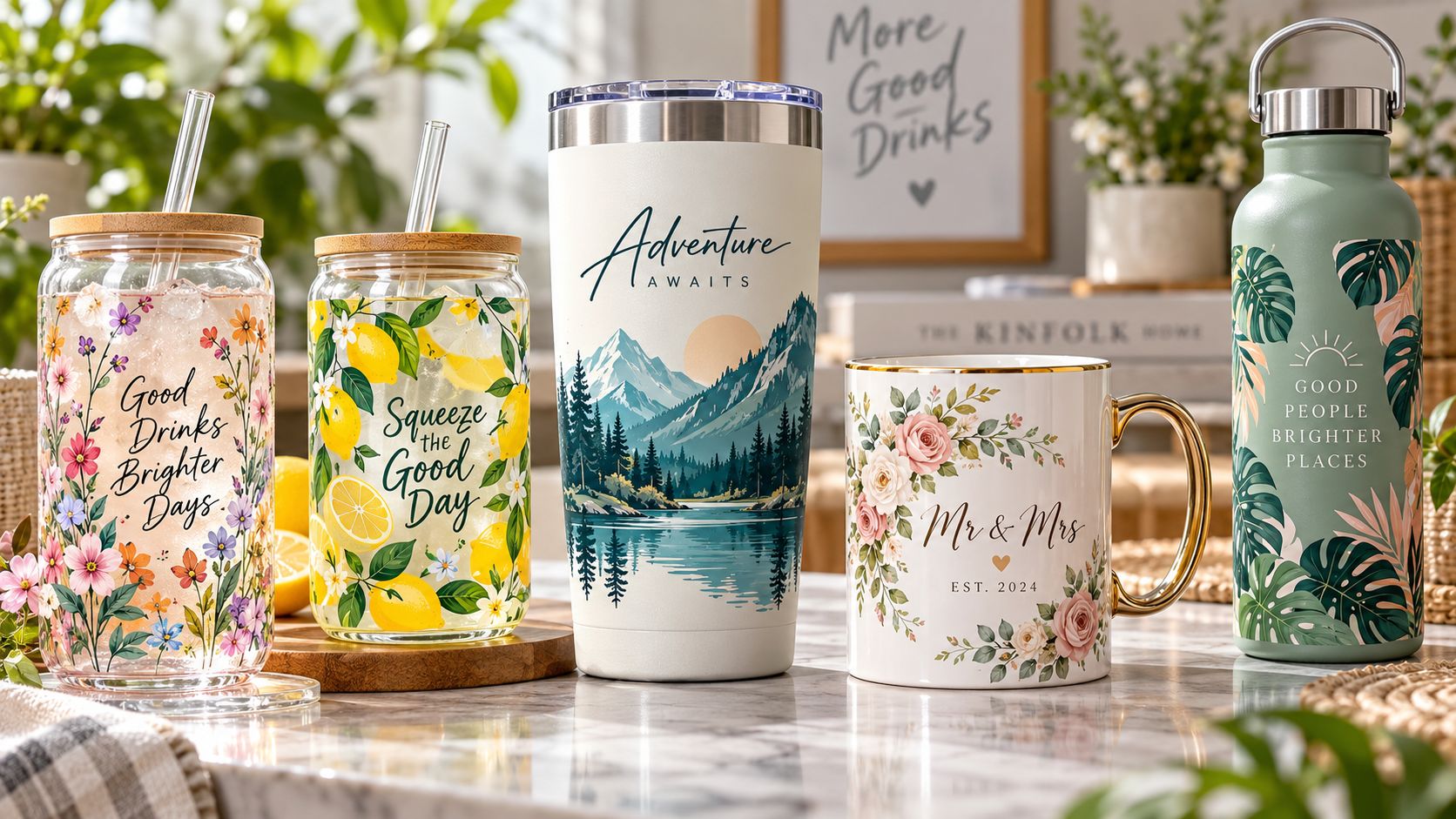
Hard goods : acrylic signage, metal nameplates, stainless drinkware (with surface prep), wood plaques, phone cases, power banks, USBs. Special effects : gloss/matte spot varnish , textured “embossed” layers, Braille dots, simulated doming. Short-run packaging : boxes, sleeves, labels, rigid samples. Color on clear : white ink + CMYK on glass/acrylic for backlit effects. What to know about adhesion
Different substrates bond differently. Many plastics (PP, PE, some silicones) need primer or corona/ flame treatment . Metals and glass benefit from thorough cleaning and, sometimes, adhesion promoters. Erasmart can advise primer selection based on your bill of materials.
Compact entry-level model with L800 print head, ideal for small items and hobby projects (120*210mm print size).
L800 print head with 210*290mm print size, perfect for small businesses and personalized gifts (0-130mm print height).
DX7 print head with 350*450mm print size, suction platform, and CMYK+WW+VV for high-volume production.
XP600 print head with 350*450mm print size, 5㎡/H speed, ideal for medium to large production runs.
Dual XP600 print heads with 5.5㎡/H speed, CMYK+WW+VVVVVV for enhanced color gamut and productivity.
Dual XP600 print heads with 350*450mm print size, designed for industrial-grade continuous production.
Large-format 420*600mm printer with dual XP600 heads, perfect for signage, panels and large materials.
Dual XP600 heads with automatic lamination, specialized for UV DTF film printing (width up to 350mm).
Specialized for phone cases (TPV/PVC/wood/metal), with 10-inch display and 0-10mm adjustable height.
DTF printing outputs pigment ink onto a PET film , coats it with a thermoplastic adhesive powder , cures the adhesive, then heat-presses the transfer onto the garment. The adhesive bonds the ink layer to the fabric.
Garments : cotton tees, hoodies, workwear, performance polyester, blends, nylon (with appropriate settings). Inventory flexibility : print transfers ahead of time; press on demand. No pre-treatment : unlike DTG on dark shirts, DTF does not require pre-treat. Fine detail : small text and gradients transfer cleanly with good films. Pressing basics (typical ranges)
Temperature : ~150–170 °C (302–338 °F) Time : 10–20 seconds press + 5–10 seconds post-press (if needed) Pressure : medium-firm, even pressure Peel : cold or warm depending on film (follow film spec) Erasmart DTF Printer
Compact entry-level model perfect for startups and small batch production.
Enhanced A4 model with improved ink efficiency for daily small-scale production.
A3 format printer with reliable R1390 motherboard for medium production.
Standard A3 model with 250ml ink tanks for consistent daily operation.
L1800 print head model offering superior color reproduction for detailed designs.
A3 Max series with XP600 print head for increased speed and efficiency.
High-performance A3 model with DX7 print head for professional results.
High-performance A3 model with XP600 print head for professional results.
Professional dual print head A3 printer for high-volume production.
Industrial wide-format printer with dual XP600 heads (620mm width).
High-speed industrial model with dual I1600 heads (10㎡/h output).
Premium industrial printer with dual I3200 heads for maximum productivity.
Gift shop or promo products → Choose UV for phone cases, keychains, acrylic photo blocks, metal tags. Custom apparel brand → Choose DTF for cotton/ poly tees, hoodies, hats (with cap press), tote bags. Prototype packaging house → Choose UV for rigid mockups, varnish effects, short-run boxes. Team jerseys & namesets → Choose DTF for fast numbering/personalization with excellent opacity. Mixed retail shop → Consider both : UV for hard goods, DTF for garments to cover all SKUs.
UV delivers razor-sharp edges and very small text readability due to instant curing. You can stack multiple layers for tactile textures and apply spot gloss for premium packaging looks. White ink on transparent items enables vivid backlit graphics .
DTF pigment inks provide rich solids and smooth gradients on textiles. A good ICC profile controls color on a wide range of fabrics. The final print has a soft-to-medium hand ; premium films and powders further soften the feel.
Material UV Printer DTF Printer Cotton/Blends Not typical Excellent Polyester & Performance Wear Not typical Excellent Nylon Rare, needs primer Good (test for press settings) Leather (genuine/PU) Good (with primer) Good (press-safe) Wood Excellent Not applicable Acrylic Excellent Not applicable Glass Good (with adhesion promoter) Not applicable Metals (Al/SS) Good (cleaning/primer) Not applicable Coated Paperboard Excellent Not applicable
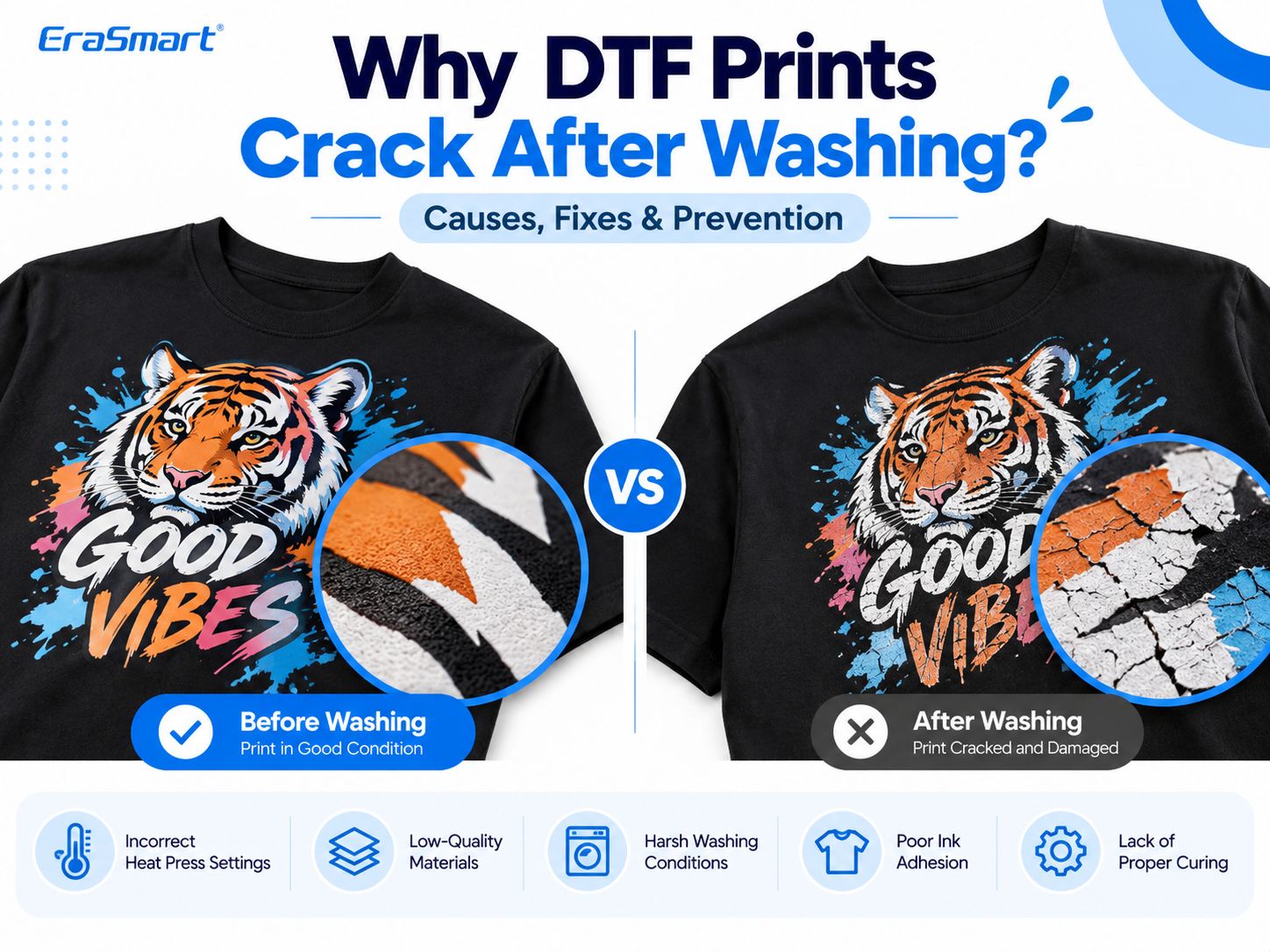
UV : Great scratch and chemical resistance on rigid goods. For outdoor exposure, add a clear UV over-varnish or laminate if the substrate demands it. DTF : Wash-durable when pressed correctly; turn garments inside-out, use mild detergents, avoid over-drying. Quality powder and proper cure prevent cracking.
Load jig/fixture, align artwork. Clean/prep (if needed), print CMYK+W/varnish. Ready to ship immediately (no drying time). Throughput tip : Nest many items in one bed; run batch jigs. DTF (Transfer-Based)
Print to PET film (CMYK+W). Apply powder & cure (automatic shaker/oven or manual). Press onto garment; peel; optional post-press. Throughput tip : Print/stock transfers in bulk; press on demand during peak hours.
Cost & Pricing Considerations (Indicative)
Cost Element UV Printer Cost DTF Printer Cost Hardware Higher upfront Lower to mid upfront Inks UV-curable (premium) Water-based pigment (economical) Consumables Primers, jigs, occasional varnish PET film, adhesive powder, heat press platens Per-Item Cost Low on small hard goods (ink pennies + prep) Very low per transfer; film/powder dominate Labor Fast per item with jigs Fast per garment once transfers are ready Pricing Power High on unique hard goods & special effects Strong for custom apparel & personalization Bottom line : UV wins on high-margin hard goods and premium effects; DTF wins on volume apparel and flexible inventory.
UV Printing : Low-VOC when cured; still ensure ventilation, use gloves for uncured ink, and follow SDS guidance. DTF Printing : Water-based inks with low odor; handle adhesive powders carefully to avoid dust inhalation; maintain ovens/presses safely. Erasmart provides guidance on safe operation and recommended consumables to keep your workspace compliant and comfortable.
Sell rigid promotional items (phone cases, acrylic, metal gifts). Need spot gloss, matte, or raised textures to differentiate. Work with short-run packaging, awards, signage samples . Choose DTF Printer if you:
Run an apparel-first business: tees, hoodies, uniforms, sportswear. Want no pre-treatment on dark garments and the ability to stock transfers . Need fast personalization across many fabric types. Choose Both if you:
Operate a one-stop customization shop serving tourists, corporate swag, teams, and local brands. The systems complement each other and expand your SKU coverage.
Q1: Can a UV printer replace a DTF printer? Not generally. UV excels on rigid/ coated items and effects; DTF excels on textiles . Many shops run both.
Q2: How does DTF compare to screen printing? DTF has lower setup and full-color at any quantity; screen printing wins for very large runs with spot colors at the absolute lowest cost per unit.
Q3: Is white ink maintenance difficult? White ink is heavier and can settle. For both UV and DTF , stick to regular agitation and daily nozzle checks ; follow Erasmart’s maintenance schedule to avoid clogging.
Q4: What about stretch and cracking on DTF? Use quality film/powder , ensure complete adhesive cure , and press with correct pressure & temperature . Done right, DTF transfers stretch and resist cracking.
Q5: Will UV prints stick to glass and metal? Yes, with thorough cleaning and often a primer/adhesion promoter . Always test your exact substrate.
Q6: Are UV inks safe for items that touch skin? Once fully cured, UV inks form a solid film. For direct and prolonged skin contact, confirm compliance for your application and consider a clear overprint to isolate the ink layer if needed.
Q7: Can I do photorealistic prints? Yes. Both technologies handle high-resolution images. UV provides ultra-crisp dots on rigid media; DTF creates smooth gradients on garments.
Q8: What press settings should I start with for DTF? As a starting point: 160–165 °C for 12–15 seconds , medium-firm pressure , cold or warm peel per film spec. Then validate with wash tests.
Manufacturing Expertise in China : Scalable production and responsive lead times. End-to-End Solutions : Printers, inks, films/powders, primers, fixtures, RIP setup. Onboarding & Support : Application recipes, adhesion/wash testing guidance, maintenance training. Growth-Ready : From starter setups to multi-lane production cells.
If your catalog leans toward rigid promotional goods, signage, packaging, or premium effects , start with a UV printer . If your business centers on garments and wearable branding , start with a DTF printer . If you want to own your local market for customization, run both and route every job to the most profitable workflow.
UV printing represents the future of digital printing — fast, clean, and incredibly versatile. With the ability to print vivid, full-color images on virtually any surface, UV printers have redefined personalization, manufacturing, and creative production.
For businesses seeking high-margin customization , eco-friendly printing , and on-demand manufacturing , investing in a UV printer is not just a technology choice — it’s a strategic advantage.